The transition to clean energy sources in the agri-food sector is already a reality, driven by the need to reduce emissions, improve energy efficiency, and decrease dependence on fossil fuels. Industrial processes such as cooking, pasteurization, or cleaning require large amounts of heat, and the generation of steam with solar technologies is emerging as a sustainable and cost-effective solution.
In this article, we analyze the case of a brewery in Valencia that has integrated a concentrating solar thermal installation based on linear Fresnel collectors. We show how this plant covers 10% of its thermal demand through solar energy, avoiding the emission of 1,300 tons of CO₂ per year, with an amortizable investment thanks to the energy sales model and public support.
Introduction
In the brewing industry, steam is an essential resource. From bottle pasteurization to wort boiling or equipment cleaning, a reliable and high-performance thermal source is required. The analyzed factory, located in Valencia, operates continuously and has a high daily thermal demand.
To reduce its carbon footprint and diversify its energy matrix, the plant has adopted a concentrating solar thermal (SHIP) installation, a solution that allows supplying high-temperature steam using only the sun as an energy source.
System Characteristics
Concentrating Solar Thermal Plant (SHIP)
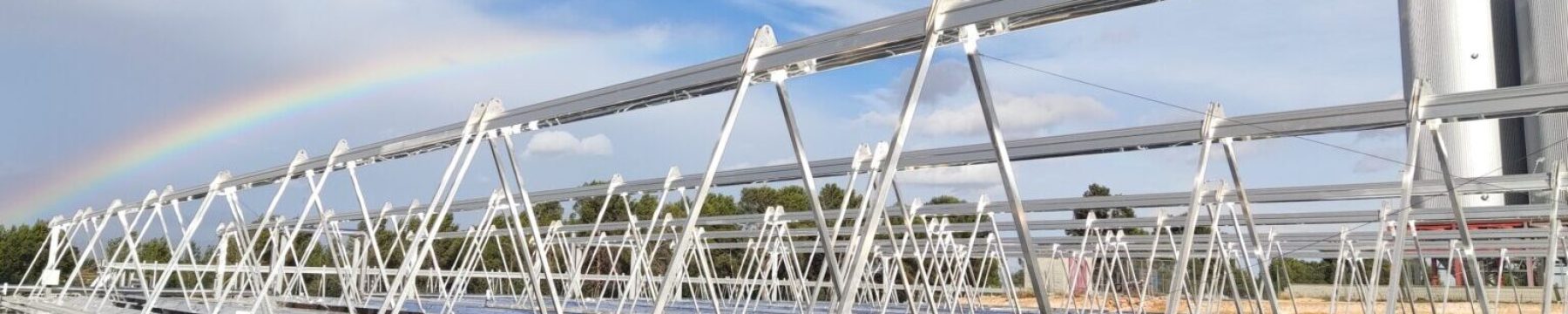
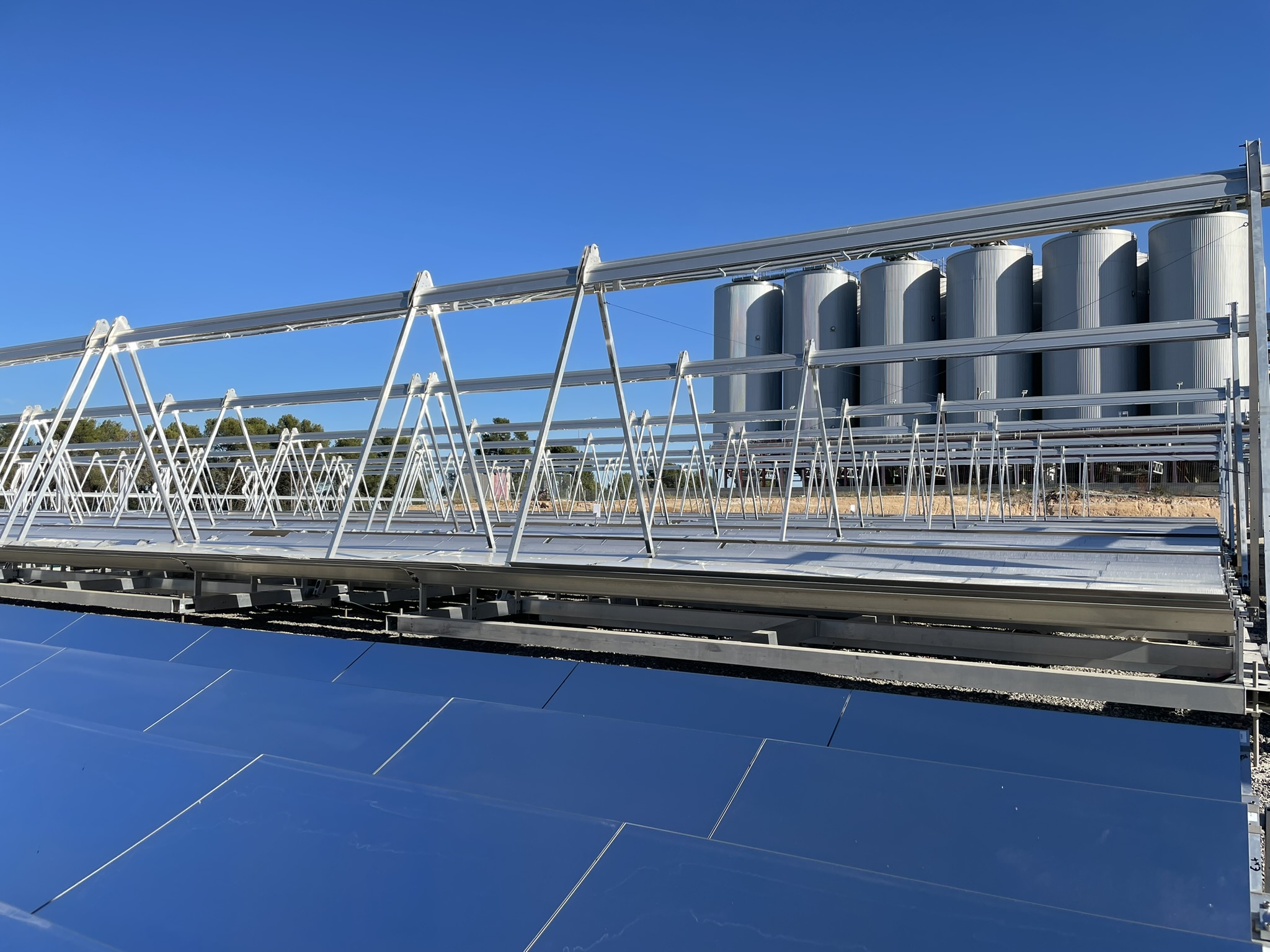
- Technology: Linear Fresnel collectors, model FLT20 (manufactured by Solatom).
- Installed thermal power: 4.14 MW.
- Operating temperature: 225 °C.
- Steam pressure: 8 bar, compatible with demanding processes in the sector.
- Collection surface: 5,925 m² (approximately 6,000 m²).
- Storage system: Pressurized water accumulator with 1.5 MWh thermal capacity.
The integration of this system allows generating solar steam without modifying existing industrial processes, highlighting the flexibility and compatibility of the solar thermal solution with plants in operation.
Sustainability and Emissions Reduction
- Emission reduction: 1,300 tons of CO₂ avoided each year.
- Solar coverage of thermal demand: 10% of the factory.
- Replaced fuel: Natural gas.
The solar thermal plant allows directly reducing the use of fossil fuels, advancing towards the decarbonization of the production process without compromising product quality or altering the existing infrastructure.
Economic savings and operational efficiency
- Total investment (CAPEX): 3 million euros.
- Specific collection cost: €500/m².
- Public subsidy received: 1.4 million euros, which improves the economic return of the project.
- Business model: Energy sales (thermal PPA), where the brewery only pays for the solar steam consumed.
- Operation and maintenance costs (O&M): Approximately 1% of the annual CAPEX.
- Internal rate of return (IRR): Confidential, but positive thanks to the model and public aid.
This model allows externalizing the investment, eliminating the initial economic barrier and generating energy savings from the first day of operation.
Energy Resilience and Additional Benefits
- Flexible heat management: The thermal storage system allows adapting steam production to the plant’s demand, optimizing operation even on days with variable radiation.
- Operational compatibility: Does not require redesigns or prolonged shutdowns for integration.
- Replicable benchmark: Although presented in theoretical format, this case is based on a real installation in operation and serves as a model for other process industries interested in decarbonizing industrial heat.
In addition to sustainability, the installation improves the factory’s energy resilience, facilitating compliance with environmental regulations and enhancing its brand image as an industry committed to the climate.
Conclusion
This case demonstrates that concentrating solar thermal energy is viable, efficient, and adaptable to the most demanding industrial processes, such as that of a brewery. The combination of sustainability, economic savings, and simplicity of integration makes Fresnel solar thermal a strategic solution for the energy transition in the agri-food sector.
With the evolution of business models and institutional support, an expansion of these solutions in multiple industries is expected, promoting the decarbonization of process heat and reinforcing the competitiveness of Spanish industry.