An energy community that drives local development
The energy transition has become a strategic opportunity for municipalities, especially in rural areas, where cost optimisation, sustainability and social cohesion are key to territorial development. In the Province of Valencia, an energy community promoted by EDINOR (a subsidiary of the Repsol Group) and implemented by GDES Efficiency shows how collective self-consumption can become a real tool for local development and for tackling depopulation.
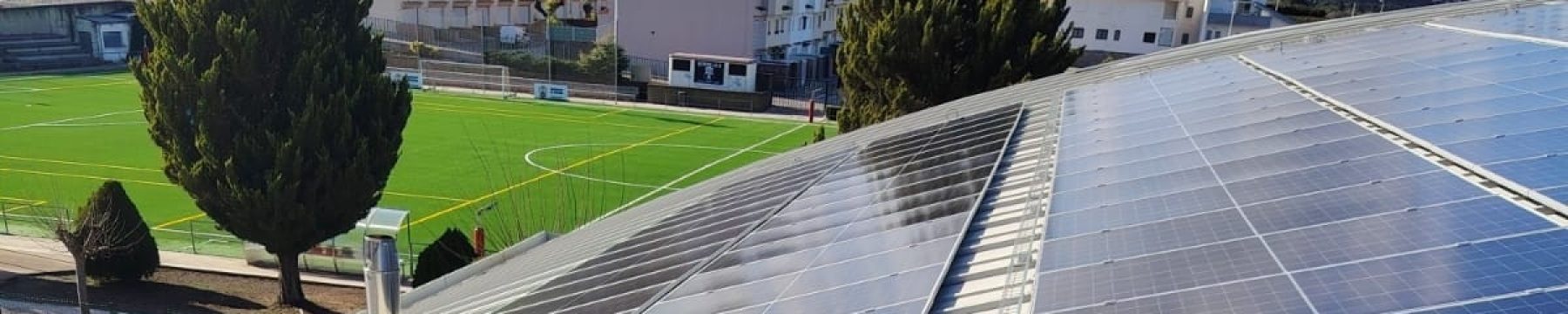
The project enables local councils to offer residents, small businesses and public services access to locally produced renewable energy, shared under a collective self-consumption model, integrating renewable generation into existing municipal infrastructure without the need to use additional land.
Municipalities face the challenge of reducing their energy bills, lowering their carbon footprint and providing sustainable solutions for their citizens, all with limited resources. In this context, energy communities represent an effective solution to democratise access to renewable energy, improve efficiency and generate economic, environmental and social benefits at local level.
What does the project involve?
The energy community project was delivered in record time, ensuring the simultaneous commissioning of all installations and integrating renewable generation into existing public infrastructure:
- Number of installations: 10 photovoltaic plants
- Total installed capacity: 307 kWp
- Estimated annual production: more than 450 MWh of renewable electricity
- Location: rooftops of municipal buildings
- Energy model: local collective self-consumption
Environmental impact and value for the territory
From an environmental standpoint, the project’s impact is significant. The energy community avoids the emission of approximately 100 tonnes of CO₂ per year, contributing directly to local and regional climate targets and strengthening the role of municipalities as active players in the transition towards a more sustainable energy model.
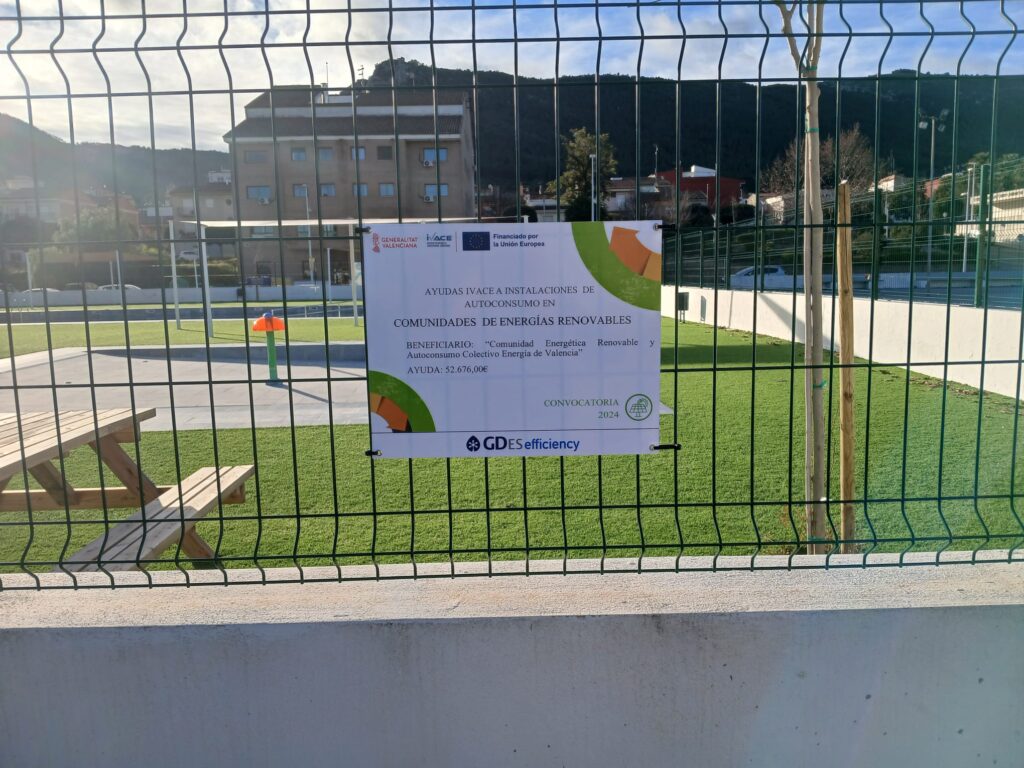
A key factor in the project’s viability has been the support of IVACE public funding, which has helped reduce initial financial barriers and accelerate the rollout of energy communities at municipal level.
By reducing energy costs for households and public buildings, local councils free up resources that can be allocated to improving municipal services. At the same time, it strengthens the appeal of small municipalities as places to live and start a business, contributing directly to retaining population and combating rural depopulation.
The speed of execution has been decisive in maximising this impact, ensuring the project was commissioned within demanding timelines and to high standards of quality and safety.
A model for the energy transition with local impact
This energy community is a comprehensive example of how the energy transition can be implemented at local level. For local councils, it is a practical tool to reduce costs and generate social value; for EDINOR and the Repsol Group, a demonstration of the potential of collective self-consumption; and for GDES, the consolidation of its ability to turn energy into real opportunities for the territory.